
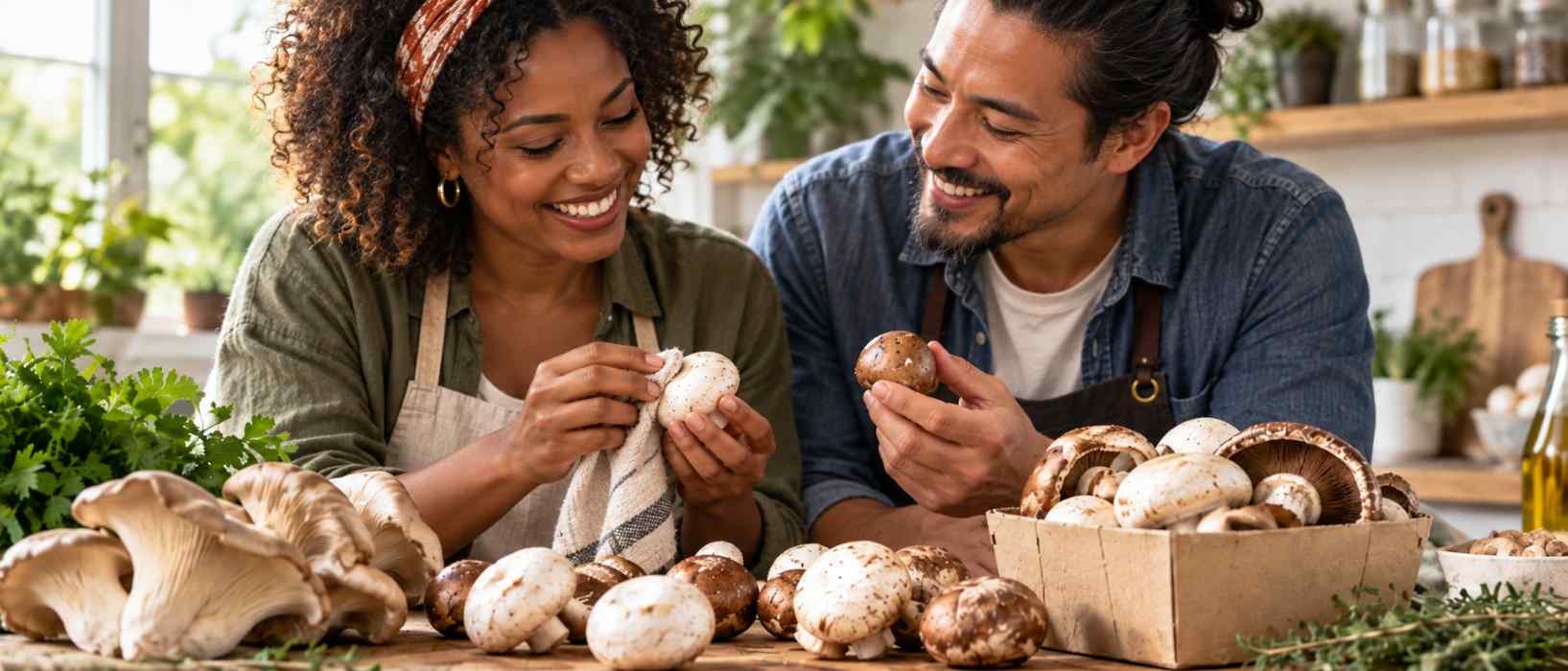
Sustainable Mushrooms: Introduction
You would think all mushrooms were sustainable mushrooms, as they are one of the more efficient foods we can grow. Wide varieties thrive on materials such as straw, sawdust and agricultural by-products, turning low-value organic matter into food.
Yet some familiar supermarket mushrooms come with a less obvious issue: peat. Button, chestnut and portobello mushrooms are often grown using a peat-based casing layer, linking an otherwise efficient crop to the degradation of important carbon-storing habitats.
Fortunately, better growing methods are already emerging.

A Brief History of Mushrooms
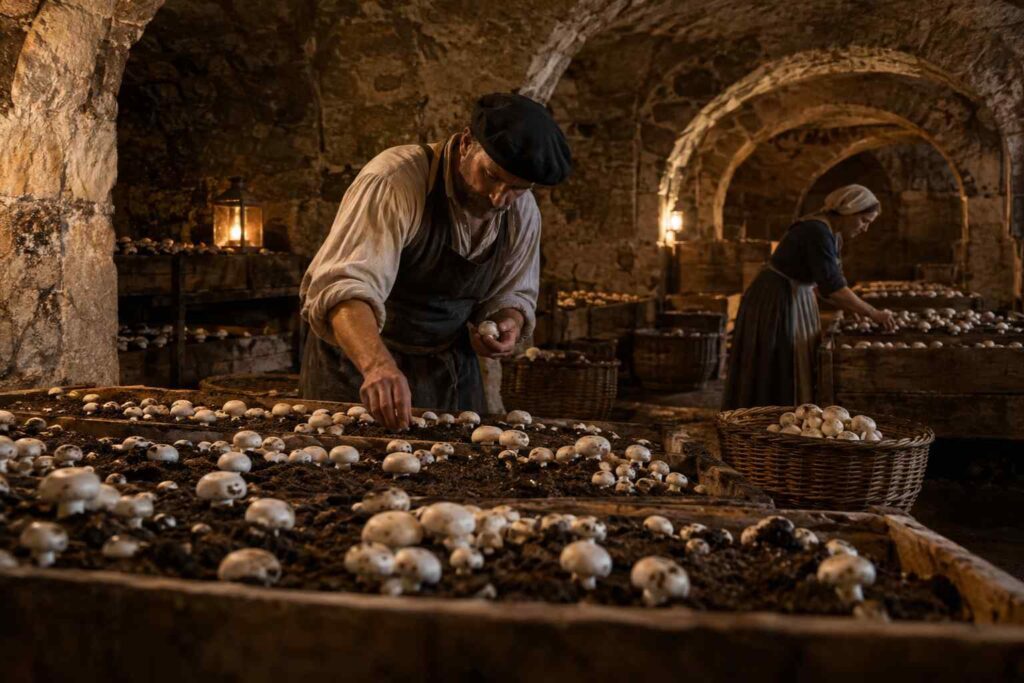
Humans have gathered wild mushrooms for thousands of years, but commercial cultivation developed much later. France became a major centre of mushroom growing in the eighteenth century, where growers learned that mushrooms thrived in beds made from composted horse manure.
As production expanded around Paris, growers began using abandoned underground quarries. Their naturally cool, humid conditions were ideal for mushrooms and reduced the need to recreate those conditions above ground. The common button mushroom became so closely associated with the city that it is still widely known in French as the champignon de Paris.
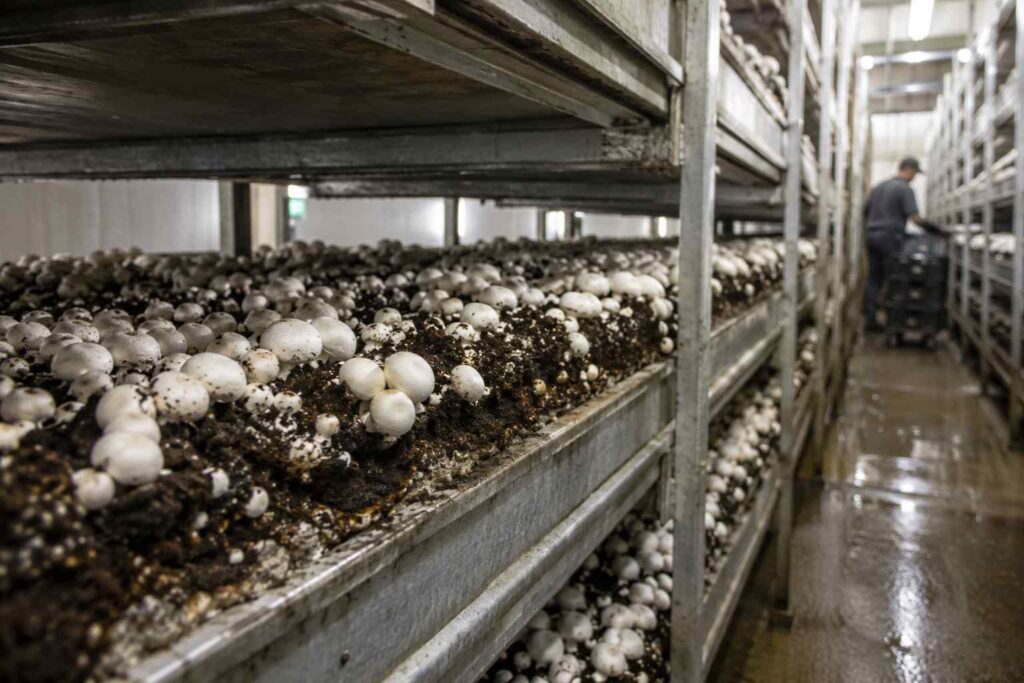
Mushroom growing later moved into purpose-built farms, where temperature, humidity, ventilation and growing substrates could be controlled more precisely. The underlying biology, however, remained the same. Fungi are remarkably good at breaking down organic material and converting it into new growth.
That ability is still central to modern mushroom farming. Depending on the variety, growers can use straw, sawdust, manure and other agricultural by-products as part of the growing medium, giving mushrooms an unusually strong link to circular food production. Today, sustainable mushrooms sit at an interesting meeting point between traditional cultivation and efforts to make food production more resource-efficient.
Find Out MoreThe Environmental Impact
Non-sustainable mushrooms can have a relatively modest environmental footprint compared with many foods, but the way they are grown makes a significant difference. A 2024 European lifecycle study identified compost production, electricity and casing materials as some of the main environmental hotspots in button mushroom production.
Commercial farms need controlled temperatures, humidity and ventilation, while fresh mushrooms also require efficient cooling and transport because they spoil quickly. In the UK, most imported fresh mushrooms come from Poland and Ireland, so origin can still be useful when comparing similar products.
The most distinctive issue is the casing layer used for button, chestnut and portobello mushrooms, which has traditionally contained peat because it holds water well and supports reliable fruiting. The IUCN UK Peatland Programme estimates that mushroom growing uses around 100,000 cubic metres of peat each year in the UK, roughly one ninth of UK peat extraction.
Encouragingly, progress is already visible. Sainsbury’s has introduced conventionally grown peat-free mushrooms using an alternative casing developed with supplier Monaghan and says the change will avoid more than 20,000 tonnes of peat use each year. Peatlands take thousands of years to form and play an important role in storing carbon, supporting wildlife and regulating water.
What to Look For in Sustainable Mushrooms
Start with the growing method, and for white, chestnut, button or portobello mushrooms, look for peat-free labelling where available. Sainsbury’s now offers a mainstream option, while several smaller UK growers already avoid peat.
Packaging is another useful comparison. Loose mushrooms, paper punnets and recyclable cardboard trays reduce reliance on traditional plastic packaging. Origin can help too, particularly when UK or locally grown options are available, although distance alone does not determine a product’s overall impact.
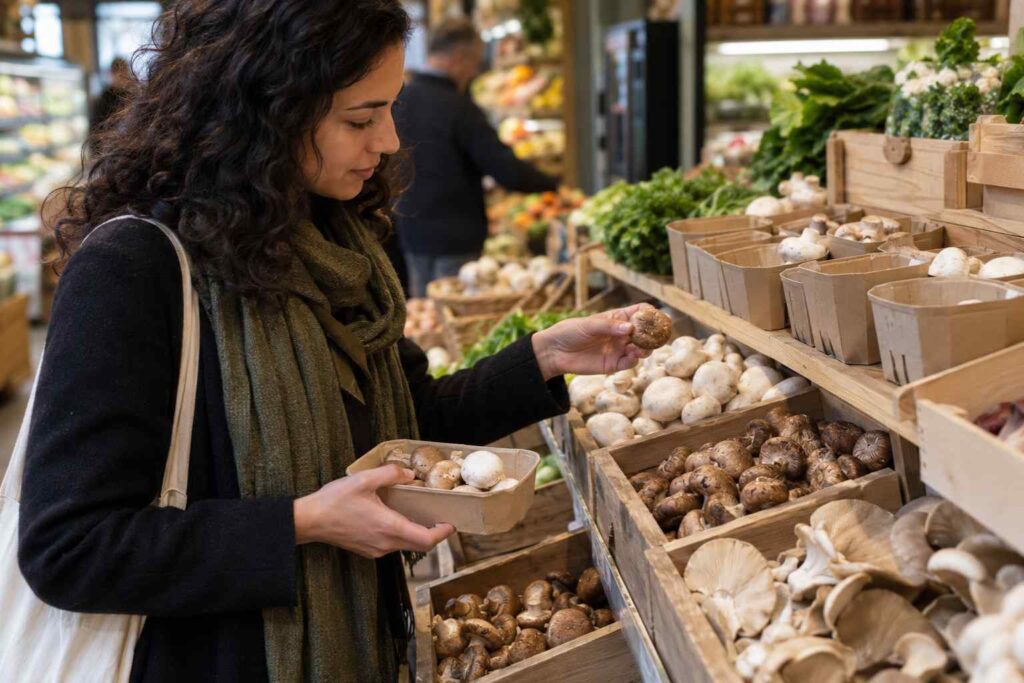
Different varieties may also use more circular growing methods. Oyster, shiitake and lion’s mane mushrooms can be grown on materials including straw and sawdust, while some independent growers use by-products such as spent coffee grounds.
Finally, buy what you are likely to eat, as mushrooms spoil relatively quickly, so preventing food waste avoids wasting the resources used to grow, cool, package and transport them. Clear information about growing substrate, peat use, packaging and origin is generally more useful than broad environmental claims.

Three Brands of Sustainable Mushrooms Worth Knowing
Fat Fox Mushrooms
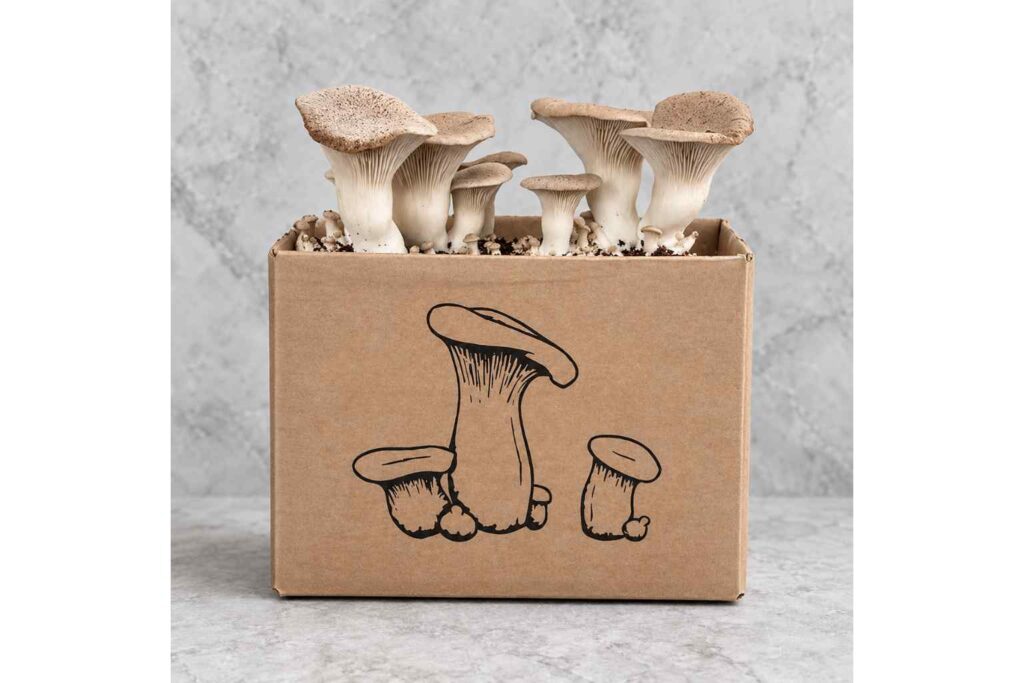
Fat Fox Mushrooms is a London grower specialising in gourmet sustainable mushrooms and home-growing kits. The business uses peat-free substrates and says around 94% of the materials used in its kits come from industry by-products. It is also unusually transparent about the small amount of plastic it still needs to use, which we think is refreshing and put them ahead of so many!
Website: https://www.fatfoxmushrooms.com
Use code PLAYITGREEN15 for 15% off your first order. Offer lasts six weeks from publication.
Caley Brothers
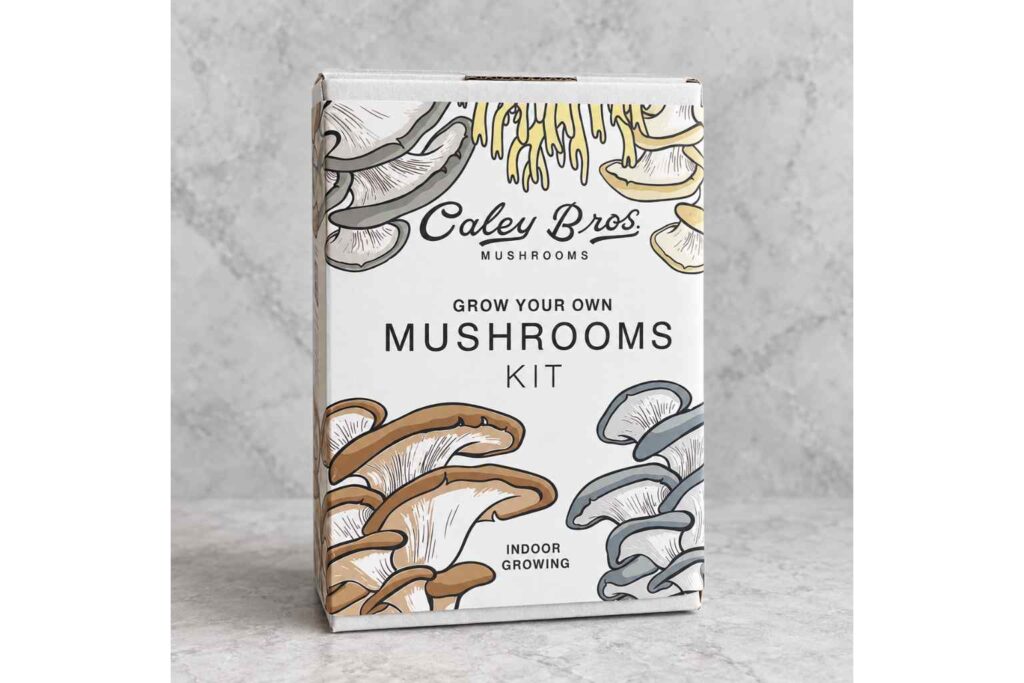
West Sussex-based Caley Brothers grows mushrooms without peat and has experimented with circular materials including spent coffee grounds collected from local businesses. Its grow-your-own range includes a kit that lets people add their own used coffee grounds to grow oyster mushrooms at home, making the idea of turning waste into food very tangible.
Website: https://www.caleybrothers.co.uk
Use code WELCOME10 for 10% off your first order.
Forest Fungi
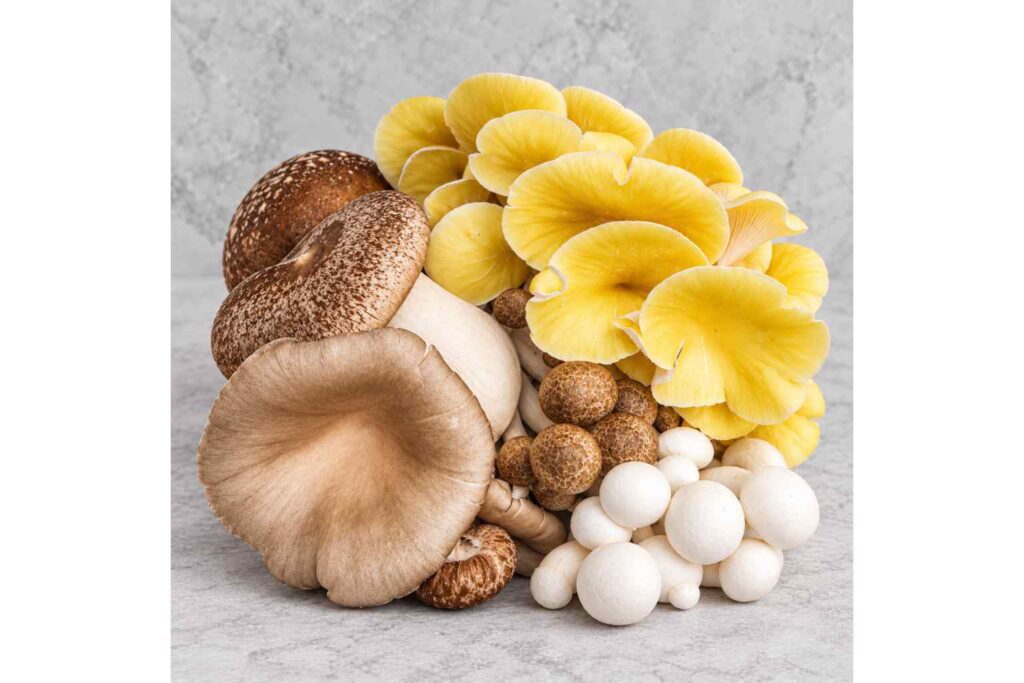
Forest Fungi is an independent grower based in Devon, producing varieties including oyster, shiitake, lion’s mane and hen of the woods. It supplies restaurants, wholesalers and Riverford, which lists its organic mixed mushrooms as peat-free and grown on a substrate made from sawdust and rye, supplied in paper punnets.
Website: https://forestfungi.co.uk
Play It Green members may have a chance to win one of the eco-friendly kettles from this week’s featured brands – keep an eye out in your weekly newsletter, and if you aren’t a member yet, now might be a great time to join us!
Sustainable Mushrooms: Wrap-Up
Mushrooms already have plenty going for them, particularly their ability to grow on agricultural by-products and other low-value materials. The hidden peat issue shows there is still room to improve how they reach our plates.
Choosing peat-free options where available, checking packaging and origin, reducing food waste and supporting smaller growers can all improve the picture without making everyday shopping complicated.
At Play It Green, that is exactly the kind of practical sustainability we want to make easier.
Create Commercial Value with Play It Green
Play It Green helps businesses make sustainability practical, measurable and commercially sensible.
Our members learn through simple weekly education like this article on sustainable mushrooms, reduce the business footprint with support and expert signposting, repair nature across land, coast and sea, and create social impact through our 10% revenue giveback to good causes.

That gives your business credible action you can share with employees, customers and other stakeholders, backed by transparent reporting and measurable impact.
If you want to cut costs, reduce risk, attract great people and build stronger customer loyalty through sustainability, including measurement and reduction, nature repair and social impact, speak to Play It Green.
Find Out More