

Cut Energy Waste In Business: Introduction
When energy bills go up, it is tempting to look straight at new equipment, solar panels or a big building upgrade rather than to cut energy waste in business. However, there is usually a more useful place to begin: finding out where energy is already being wasted.
That does not need to become another complicated project. The UK Government’s business energy guidance starts with the same sensible principle: understand how your premises and equipment use energy, then focus on the changes that will make a genuine difference.
For a hotel, care home, school, office, restaurant, warehouse or holiday park, the first savings can often come from the same few areas. Equipment running at the wrong time, poor maintenance, settings nobody has revisited, or a lack of ownership over daily energy use. The aim is not to make people cold or turn operations into a headache; it is to stop paying for energy that you simply don’t need to.
1. Find the Energy You Do Not Need

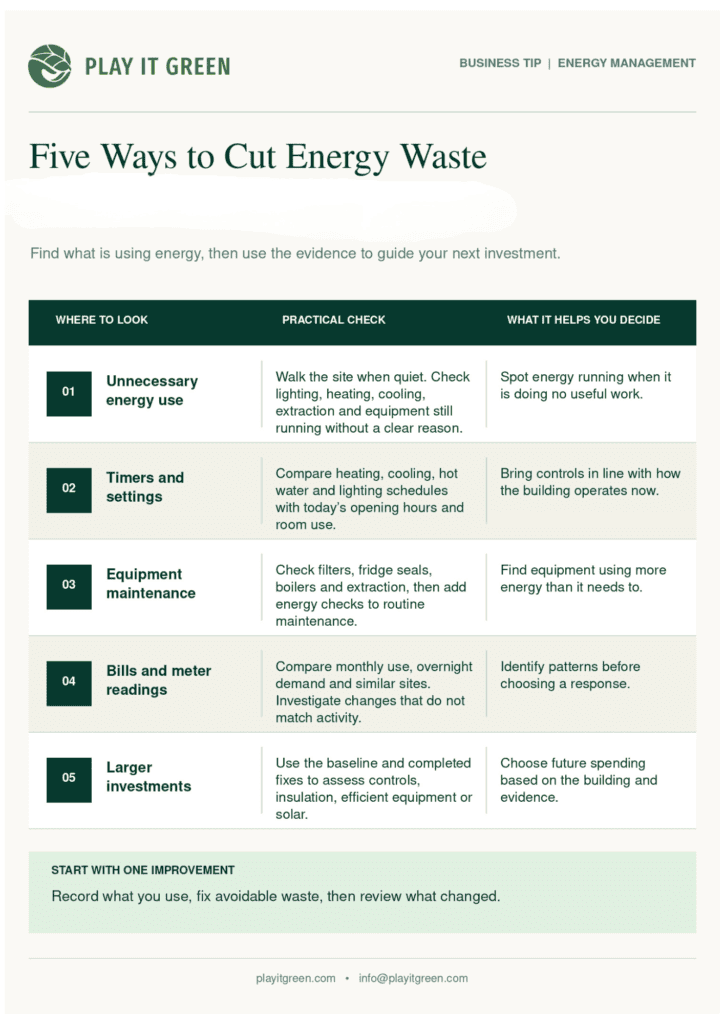
You can start to cut energy waste in business by walking the site when it is quiet, early in the morning, late in the evening or between shifts. Look for lighting, heating, cooling, extraction, displays, refrigeration and equipment that are still running without a clear reason.
The UK Business Climate Hub has practical tools for small and medium-sized businesses, although the most useful first step is often a plain list of what runs, when it runs and who can change it. A kitchen may need refrigeration overnight, for example, while a meeting room, display screen or empty office rarely needs the same level of energy use.
This is also where people can make a real difference. Staff usually know which equipment causes problems, which controls are confusing and where routines have gradually drifted. Asking them early makes the work more accurate and less irritating.
2. Check Timers, Controls and Set Points
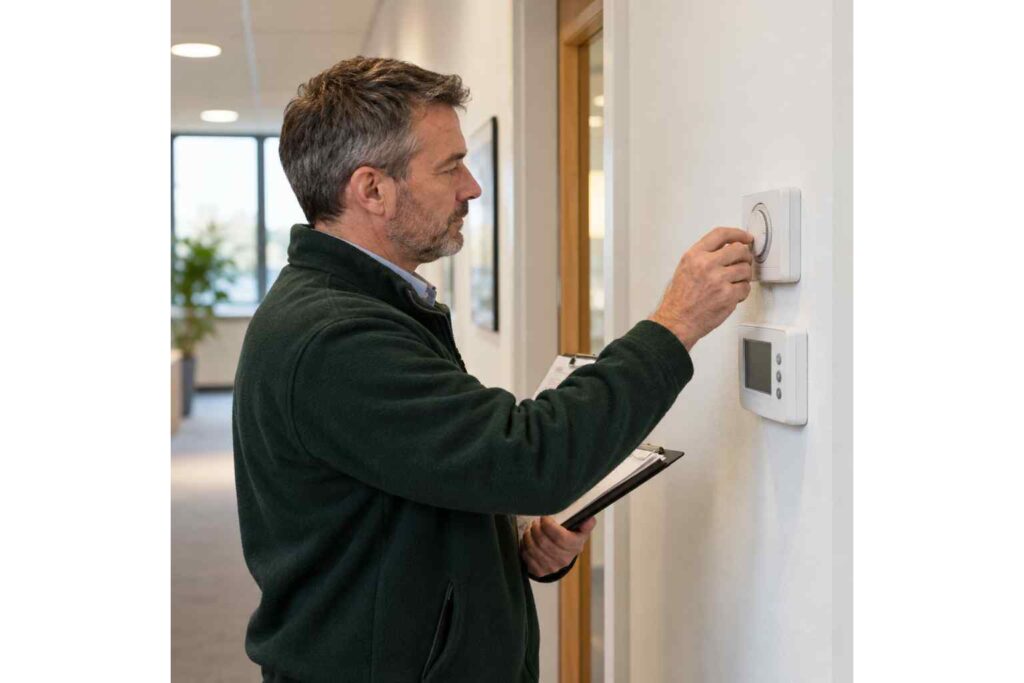
Many businesses carry on using the schedules they set years ago. Opening hours change, teams work differently, guest patterns move with the seasons and equipment gets replaced, yet timers and controls stay exactly where they were.
Review the heating, cooling, hot-water and lighting settings against how the building works now. Check whether rooms heat up before people arrive, whether they stay heated long after people leave, and whether anyone has changed a thermostat without explaining why.
Small changes can add up, particularly where a site has long operating hours. The important part is to make changes carefully, record what you changed and ask the people using the space whether it still works. Energy savings that create complaints or operational problems are rarely savings for long.
3. Maintain What You Already Own
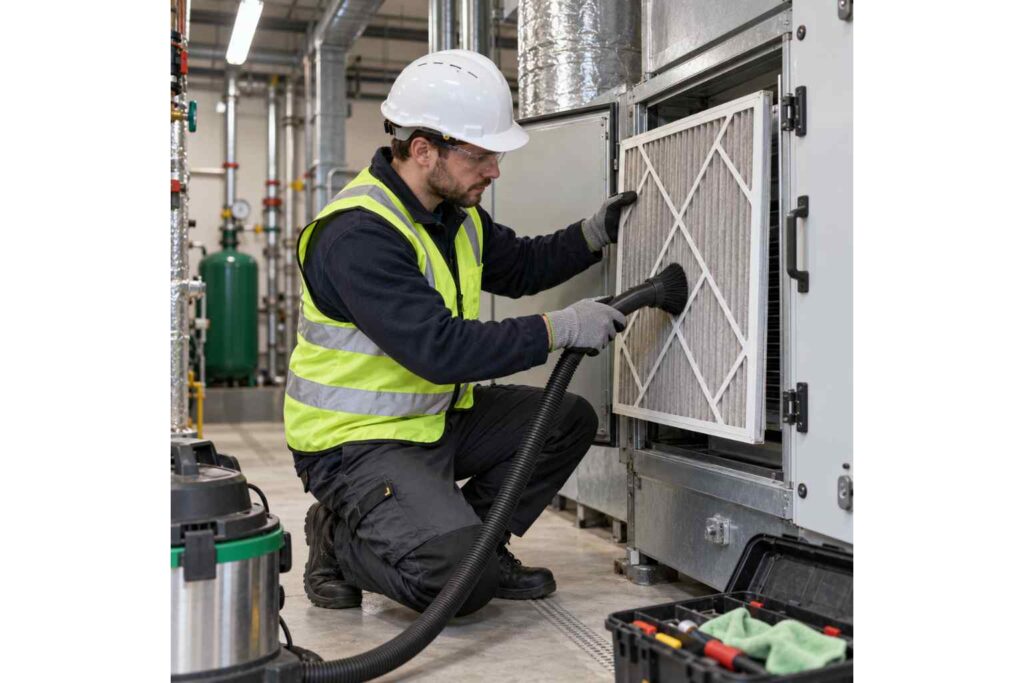
Poor maintenance increases energy waste in the background. A blocked filter makes a fan work harder, a leaking fridge seal loses cold air, an unserviced boiler can perform badly and poorly maintained extraction can waste both energy and staff time.
This does not mean every business needs a major refurbishment. It means maintenance should include the question: is this equipment using more energy than it needs to? The CIBSE guidance on energy efficiency is useful here because it treats energy performance as part of normal building management rather than a separate sustainability exercise.
To cut energy waste in business, if you already have a maintenance schedule, add a few energy checks to it. If you do not, start with the equipment that runs for the longest hours or costs the most to replace. That gives you a sensible order for repairs and for deciding what might be worth spending money on later.
4. Use Bills and Meter Data to Ask Better Questions

You don’t need perfect data before you begin, although you do need enough information to spot patterns. Pull together a year of bills if you can, then look for unusually high months, changes that do not match how busy the business was, or energy still being used when the site is closed.
Detailed meter readings can give a clearer picture, especially in larger sites, although a basic monthly comparison can still uncover useful questions. Why did energy use rise when the building was less busy? Why does one site use more energy than another with a similar layout? What happens overnight?
The point is not to drown in spreadsheets. It is to turn energy into something people can manage. Once you know where the question is, you can decide whether the answer is a behaviour change, maintenance, controls, a supplier conversation or a larger project.
5. Build the Case for the Bigger Changes

Once you have dealt with obvious waste, you can make better decisions about what to spend money on. LED lighting, better refrigeration, insulation, improved controls, heat pumps and generating your own electricity, such as solar, may all help. The right choice depends on the building, how it is used and what the information is telling you.
This is where the earlier work helps. When a business can show what it uses now, what it has already improved and what a proposed change could cut energy waste in business, it has a stronger case when speaking to a landlord, applying for funding or responding to a tender. It also helps avoid buying something expensive that does not deal with the real cause of the waste.
Energy management can support wider commercial goals too. Lower costs help margins, credible evidence helps customers and procurement teams, while the changes can give staff something clear to take part in. You can see how that connects with turning sustainability into customer value when the action improves the business as well as its footprint.

Cut Energy Waste In Business: Wrap-Up
The companies that make the most progress and cut energy waste in business rarely begin with the biggest job. They start by understanding what is running, what has changed and where money is leaving the building without doing a useful job through wasted energy.
That approach makes the next decision easier. You can fix what needs fixing, give people a clear role, record the evidence and then invest where it will genuinely help.
If you want support to engage your people, create credible evidence and connect sustainability work with practical business growth, talk to Play It Green.